Large terracotta figures were made to accompany the remains of high-ranking people in ancient West Mexican tombs. Figures are often found in male-and-female pairs, likely commemorating the marriage of the deceased. Nayarit artists also depicted other major rites of passage, such as the presentation of a baby, the initiation of warriors and chiefs, young women reaching the age of courtship and marriage, and funerary rites. Such tomb figures testified to the earthly status of the deceased, qualifying the individual as a venerable ancestor-spirit expected to intercede with cosmic forces on behalf of the living community.
Seated Joined Couple 200 B.C./A.D. 300
Standing Female Figure A.D. 100/300
Figure of a Seated Female 100 B.C./A.D. 500
Seated Figure Playing a Rasp c. A.D. 100
Seated Female Figure Holding a Bowl on Her Lap
100 B.C./A.D. 300
Seated Male Figure Leaning Forward with Arms Crossed over Knees c. A.D. 200
Polychrome Standing Figure with Exaggerated Head and Hips A.D. 1/300
House Model with Ritual Feast 100 B.C./A.D. 300
Model Depicting a Ritual Center A.D. 100/800 In West Mexico, chiefdoms and statelike societies flourished between A.D. 100 and 800. Advanced agriculture, extensive trade routes, and elaborate religious festivals echoed developments in other regions of ancient Mesoamerica. The distinctive West Mexican sculptures were often included as offerings in tombs that illustrate important themes of life and the afterlife. This model of a circular ceremonial center depicts houselike temples, populated by flute players, a drummer, conch-shell trumpeters, dancers, women with children, and animals. A masked figure—likely the ruler—stands atop the central stepped pyramid.
Funerary Cheek-Piercing Ritual 200 B.C./A.D. 300
Model of a Tree-Climbing Ritual A.D. 100/800
House Model Depicting a Ritual Feast 100 B.C./A.D. 300
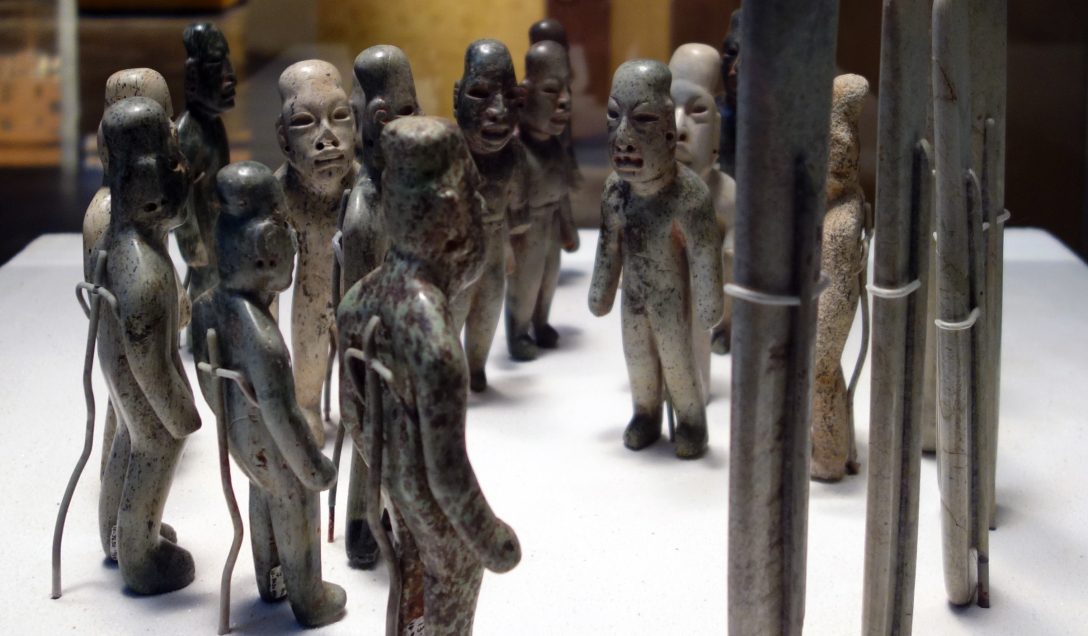


 MIKE RUGGERI'S ART INSTITUTE ANCIENT AMERICAS